

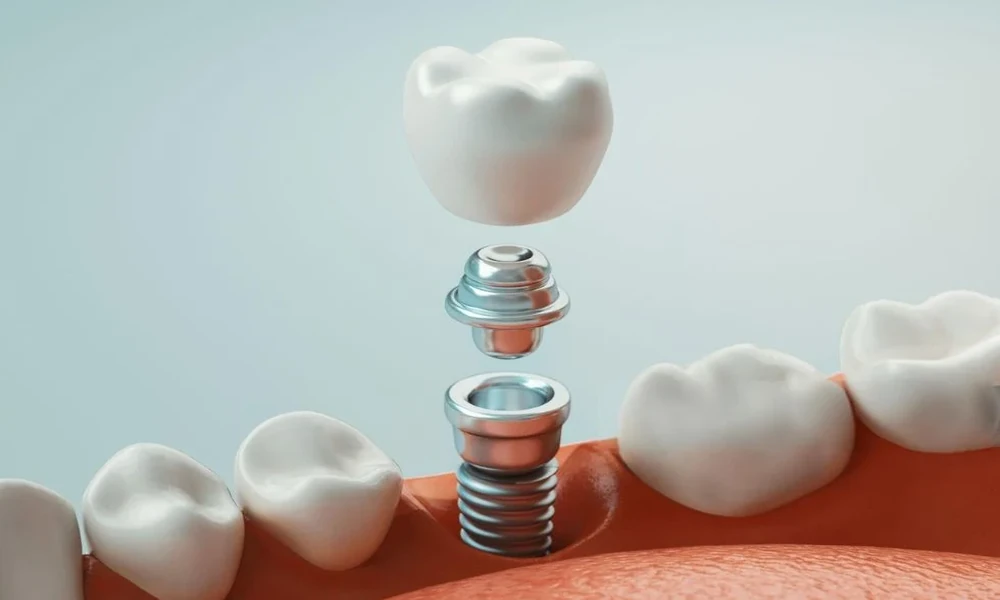
Original Medicare does not cover dental implants, and that exclusion is written into federal law rather than left to a claims reviewer’s judgment. Section 1862(a)(12) of the Social Security Act bars payment for services in connection with the care, treatment, filling, removal, or replacement of teeth, which is the provision every denial cites. Patients who bring a Medicare card to an implant consultation at a practice such as Stubbs Dental are generally quoted as self-pay unless they carry a Medicare Advantage plan with a dental allowance, so the useful question is which of the four coverage routes applies to you.
When will Part B pay for any dental work?
Only when the dental care is inextricably linked to a covered medical service, a standard CMS built out through recent Physician Fee Schedule rulemaking. The 2023 rule clarified payment for dental exams and necessary treatment before organ transplant, cardiac valve replacement, and valvuloplasty. The 2024 rule extended it to dental services connected to head and neck cancer treatment, and to exams before certain chemotherapy, CAR-T therapy, and high-dose bone-modifying drug regimens.
Reading that list carefully matters. It covers the dental clearance and the extractions that protect a medical outcome, not a titanium post placed to replace a molar lost to decay. An implant used in jaw reconstruction after tumor removal can sometimes be billed under medical benefits with the appropriate diagnosis codes, which is a documentation exercise rather than a dental benefit. CMS also accepts public submissions for additional clinical scenarios each year, so the boundary keeps moving.
Part A occasionally enters the picture when a complicated dental procedure requires an inpatient hospital stay. Even then, Medicare pays for the hospitalization, not for the dental treatment itself.
Does Medicare Advantage cover dental implants?
Some plans do, at partial rates, and this is where most realistic coverage lives. Medicare Advantage plans are private plans that replace Original Medicare, and analysis from KFF has repeatedly found the large majority of enrollees have access to some dental benefit through them.
Annual dental allowances commonly land between $1,000 and $3,000, with implants either excluded outright or covered at around 50 percent until the allowance runs out. Networks are usually narrower than a commercial PPO, and comprehensive dental benefits often carry a separate premium. The document that answers your question is the Evidence of Coverage, not the plan’s summary brochure, and implants appear there by name if they are covered at all.
What about Medigap and standalone dental plans?
Medigap covers none of this. Medicare Supplement policies pay Original Medicare’s coinsurance and deductibles, and since Original Medicare excludes implants, there is nothing for a supplement to supplement.
Standalone dental insurance bought separately runs roughly $25 to $60 a month, though waiting periods of 6 to 12 months on major services and annual maximums near $1,500 mean the arithmetic often favors paying directly. A dental savings plan, which is a discount membership rather than insurance, has no annual cap and can work better for large treatment.
How can a practice like Stubbs Dental help you use a Medicare Advantage allowance?
By requesting an organizational determination before treatment, which is the Medicare Advantage version of a pre-treatment estimate. The office submits the planned procedure codes with radiographs and clinical documentation, and the plan responds with what it will pay. Getting that in hand prevents the common outcome where the allowance covers the crown, runs dry, and leaves the surgical fee unpaid.
Ask any practice you are considering, Stubbs Dental included, whether they participate with your specific Advantage plan, whether they file the determination request for you, and how they sequence treatment when an allowance resets in January. Offices that both place and restore implants can time the two halves across benefit years, which effectively doubles a small annual allowance.
When can you change plans to get dental coverage?
During defined windows, missing them means waiting a year. The Medicare Annual Enrollment Period runs October 15 through December 7, with changes effective January 1. If you are already in a Medicare Advantage plan, the Medicare Advantage Open Enrollment Period from January 1 through March 31 lets you switch to another Advantage plan or return to Original Medicare.
Special Enrollment Periods exist for circumstances like moving out of a plan’s service area or losing employer coverage. If implant treatment is on the horizon, comparing Advantage plans on their dental allowance during the fall window is the single highest-value hour you can spend, since the difference between a $1,000 and a $3,000 allowance is real money against a $5,000 procedure.
Coverage for implants under Medicare is narrow by statute and inconsistent under Advantage plans, which makes verification the first step rather than the last. Pull your Evidence of Coverage, look for implants by name, and request an organizational determination before agreeing to a treatment date. Whether you consult Stubbs Dental or another implant practice, ask for a written estimate showing what the plan pays and what you owe on each stage, and note that money already sitting in an HSA can still be spent on dental care even though Medicare enrollment stops new contributions.
