

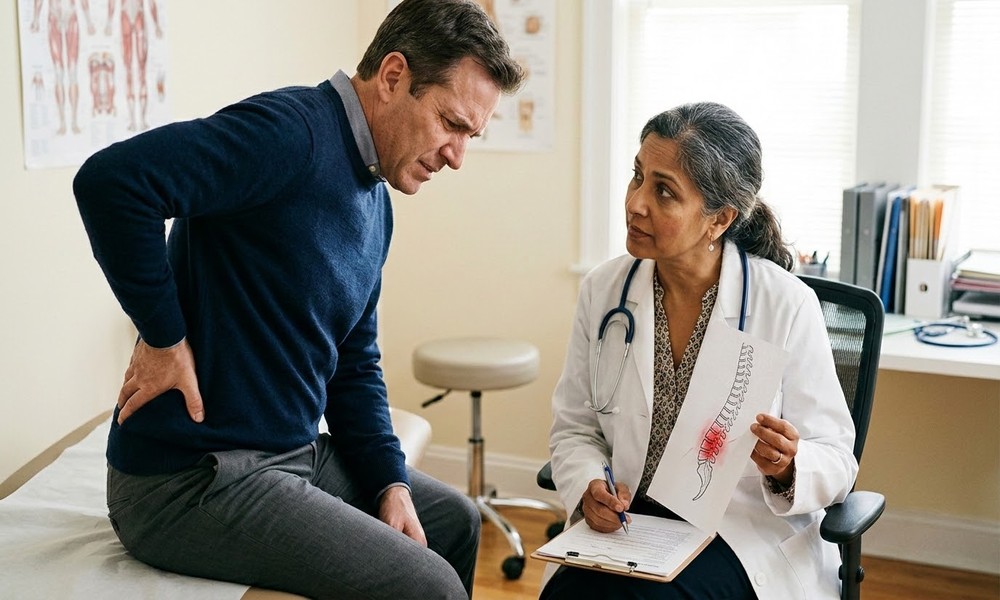
Back pain is common. For many people, it improves with rest, gentle movement, posture changes, or simple home care. A strained muscle, irritated ligament, or temporary stiffness can feel serious at first, then gradually ease over a few days or weeks.
But not all back pain comes from the muscles. Pain that lingers, spreads, causes numbness, or makes walking difficult may point to nerve compression or another spinal condition. Knowing the difference between everyday soreness and symptoms that need medical attention can help people get the right care before the problem becomes harder to manage.
Why Back Pain Can Be Hard to Read
The back is made up of muscles, ligaments, joints, discs, nerves, and bones that all work together to support movement. Because these structures sit close together, pain from one area can feel a lot like pain from another. A muscle strain and an irritated spinal nerve, for example, can both cause aching in the lower back.
That overlap is one reason back pain deserves careful attention. Muscle-related pain often improves with time and may feel worse after activity or certain movements. Nerve-related pain can behave differently. It may travel into the buttock, leg, shoulder, or arm, and it may come with tingling, burning, weakness, or changes in sensation.
For people dealing with ongoing back or neck pain, a spine and back doctor can help determine whether the pain is connected to the spine, discs, or nerves. CalSpine MD, for example, provides spine surgery care and treatment for back and neck pain, which may be relevant when symptoms suggest more than a short-term muscle issue.
Persistent Pain Deserves Attention
Pain that lasts a few days after lifting something heavy or sleeping awkwardly is not always alarming. But pain that continues for several weeks, keeps coming back, or becomes more intense should not be ignored. Ongoing back pain may mean the affected tissues are not healing as expected, or that another structure is involved.
The length of time matters, but so does the pattern. Pain that wakes someone at night, worsens despite rest, or limits basic activities like standing, walking, bending, or sitting may need medical evaluation. The goal is not to assume the worst. It is to understand whether the pain is mechanical, nerve-related, inflammatory, or structural.
Back pain can also become harder to treat when people compensate for it over time. They may change how they walk, avoid movement, or overuse other muscles. Those adjustments can create extra strain and make the original problem feel broader or more confusing.
When Nerves May Be Involved
Nerve compression happens when a nerve is pinched, irritated, or placed under pressure. In the spine, this can occur when a disc bulges, the spinal canal narrows, or arthritic changes reduce the space around a nerve. The result may be pain that moves away from the back and into another part of the body.
Sciatica is a common example. It often starts in the lower back or buttock and travels down the leg. Some people describe the pain as sharp, electric, burning, or shooting. Others notice numbness, tingling, or weakness. These symptoms are different from a typical muscle ache because they follow the path of a nerve.
A doctor who treats brain, spine, and nerve conditions may be involved when symptoms suggest nerve compression or neurological changes. Haynes Neurosurgical Group offers care in this area, including evaluation of brain, spine, and nerve conditions. When nerve involvement is suspected, a specialized assessment can help determine whether conservative treatment, imaging, or more advanced care is appropriate.
Spinal Conditions That Can Feel Like Muscle Pain
Some spinal conditions begin with symptoms that feel like ordinary back soreness. A herniated disc may cause localized back pain before it presses on a nearby nerve. Spinal stenosis may cause aching that gets worse with standing or walking. Degenerative disc disease can lead to stiffness, pain, and reduced flexibility over time.
Arthritis in the spine can also feel muscular at first. As joints become inflamed or narrowed, nearby nerves may become irritated. This can cause pain that changes with posture, activity, or time of day. Some people feel better when leaning forward, while others feel worse after sitting for long periods.
Because these conditions can look similar early on, a careful history and physical exam are important. A clinician may ask where the pain travels, which movements make it better or worse, whether weakness is present, and whether there have been changes in bladder or bowel control. Those details help guide the next steps.
The Role of Diagnostic Screening
Diagnostic screening can help clarify what is happening when back pain persists or comes with concerning symptoms. Depending on the situation, screening may include a physical exam, neurological testing, X-rays, MRI, CT scans, or other studies. Not everyone with back pain needs imaging, but it can be useful when nerve compression, fracture, infection, or a structural spine problem is suspected.
Screening becomes especially important when symptoms do not match a simple strain. Leg weakness, numbness, balance changes, or pain that spreads below the knee may suggest that the nerves need closer evaluation. Imaging can help show whether a disc, bone spur, narrowing, or another condition is affecting spinal structures.
Orthopedic care and diagnostic screening can be part of a broader spine care plan. Kimball Health Services provides orthopedic care, including spine-related care and diagnostic screening. In a non-emergency setting, this type of evaluation can help patients and clinicians understand whether symptoms are likely to improve with conservative care or need more focused treatment.
Warning Signs That Need Prompt Evaluation
Some back pain symptoms should be checked quickly. Sudden leg weakness, loss of bladder or bowel control, numbness in the groin or saddle area, fever with back pain, unexplained weight loss, or severe pain after a fall or injury may point to a more serious condition. These symptoms should not be treated as routine soreness.
Pain after trauma also deserves attention. A fall, car accident, or direct blow can cause fractures or soft tissue injuries that are not always obvious at first. Older adults and people with osteoporosis may have a higher risk of compression fractures, sometimes after only minor strain.
Other warning signs include pain that steadily worsens, pain linked with a history of cancer, or pain that comes with significant neurological symptoms. These situations are less common than simple strains, but they matter. Early evaluation can reduce the risk of complications.
How Body Weight Can Affect the Spine
The spine supports much of the body’s weight during standing, walking, lifting, and sitting. Excess weight can increase mechanical stress on the lower back, hips, knees, and other joints. Over time, that added pressure may contribute to pain, reduced mobility, and difficulty staying active.
Weight is not the only factor in back pain, and it should never be treated as the automatic explanation for every symptom. Many people with back pain have several contributing factors, including genetics, work demands, posture, past injuries, activity level, and age-related changes. Still, weight management can be one part of a long-term plan for joint and spine health.
A non-surgical weight loss center may support people who are working on weight management to improve mobility and reduce stress on the spine. PhySlim provides weight management services that may be relevant for people whose joint or spine health is affected by excess load. This type of care is usually most helpful when combined with medical guidance, movement strategies, and realistic lifestyle changes.
Treatment Depends on the Cause
Back pain treatment should match the cause. For a mild strain, rest, heat or ice, gentle stretching, and a gradual return to activity may be enough. For posture-related pain, ergonomic changes and strengthening exercises may help. For nerve compression, care may include physical therapy, medication, injections, or specialist evaluation.
Surgery is not the first step for most back pain. Many spinal conditions improve with non-surgical care, especially when symptoms are mild or moderate. But surgery may be considered when there is severe nerve compression, progressive weakness, spinal instability, or pain that does not improve after appropriate conservative treatment.
The most effective plan is often staged. A clinician may begin with symptom management and activity changes, then recommend imaging or a specialist referral if symptoms continue. This approach helps avoid unnecessary procedures while still identifying serious problems when they are present.
Conclusion
Back pain is often caused by muscle strain, but persistent or unusual symptoms can signal something more complex. Pain that travels into the arms or legs, causes numbness or weakness, worsens over time, or interferes with daily function may involve nerves or structural changes in the spine.
Paying attention to the pattern of pain can make a meaningful difference. When symptoms suggest more than routine soreness, medical evaluation can help identify the cause and guide the right treatment. Early, appropriate care may reduce discomfort, protect mobility, and keep a manageable spine problem from becoming a larger one.
